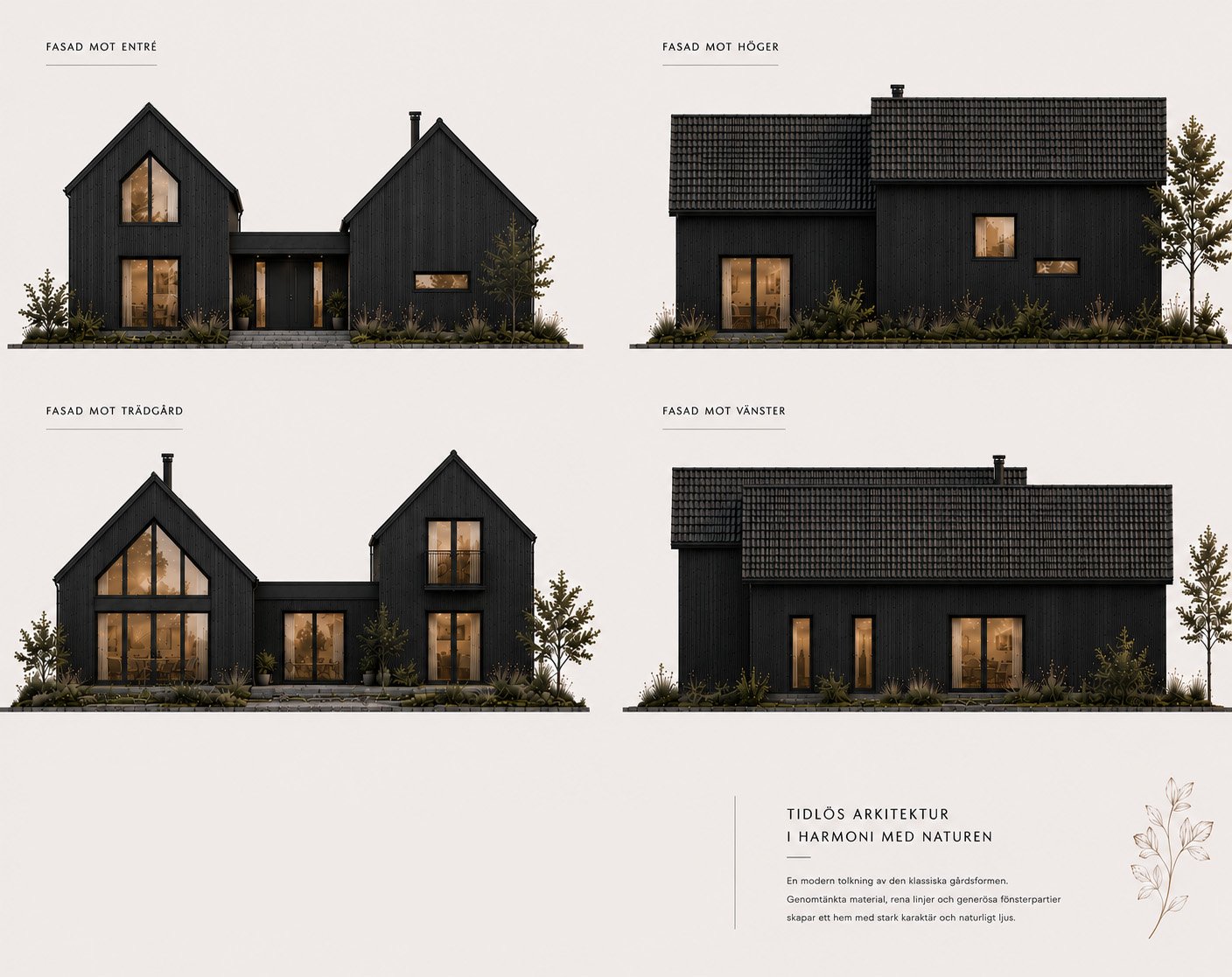
Private Villa Kungslöv is a new-build detached house in Kungslöv, Sweden, designed by ZU Arkitekt for a private couple. The project represents a considered approach to Scandinavian villa design: a home shaped not by formal ambition, but by the specific conditions of how two people want to live — with clarity, privacy, and a quiet sense of connection to the landscape around them.
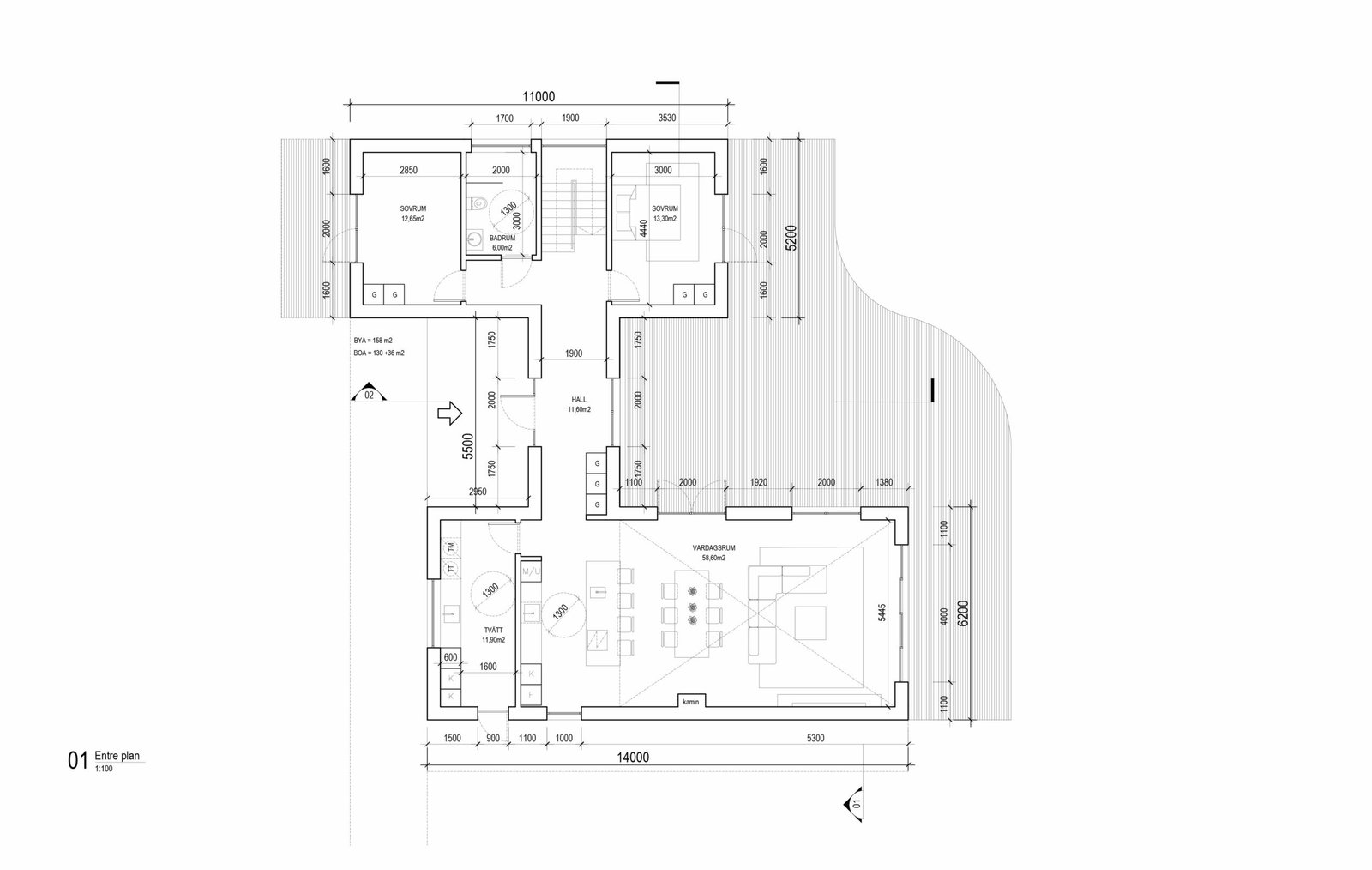
The architecture is organized by an H-shaped plan, a structural decision that determines everything: how the house sits on its site, how light enters the interior, how private life and shared life are held apart without ever feeling separated. This is contemporary residential architecture at its most purposeful — form following the needs of daily life, not the other way around.
ZU Arkitekt provided a complete design service, engaged from the initial brief through to planning consent and construction. Each stage was approached with the same degree of care — the quality of the detail is inseparable from the quality of the whole.
From the initial massing and site studies through to fully developed construction drawings. The H-shaped composition was established early and tested against every spatial and experiential criterion before the design was resolved.
Detailed spatial planning calibrated to the couple’s way of living — balancing openness, zoning, privacy, and the demands of a well-functioning home over the long term.
Complete planning documentation prepared and coordinated through the Swedish approvals process, with design integrity maintained from submission through to consent.
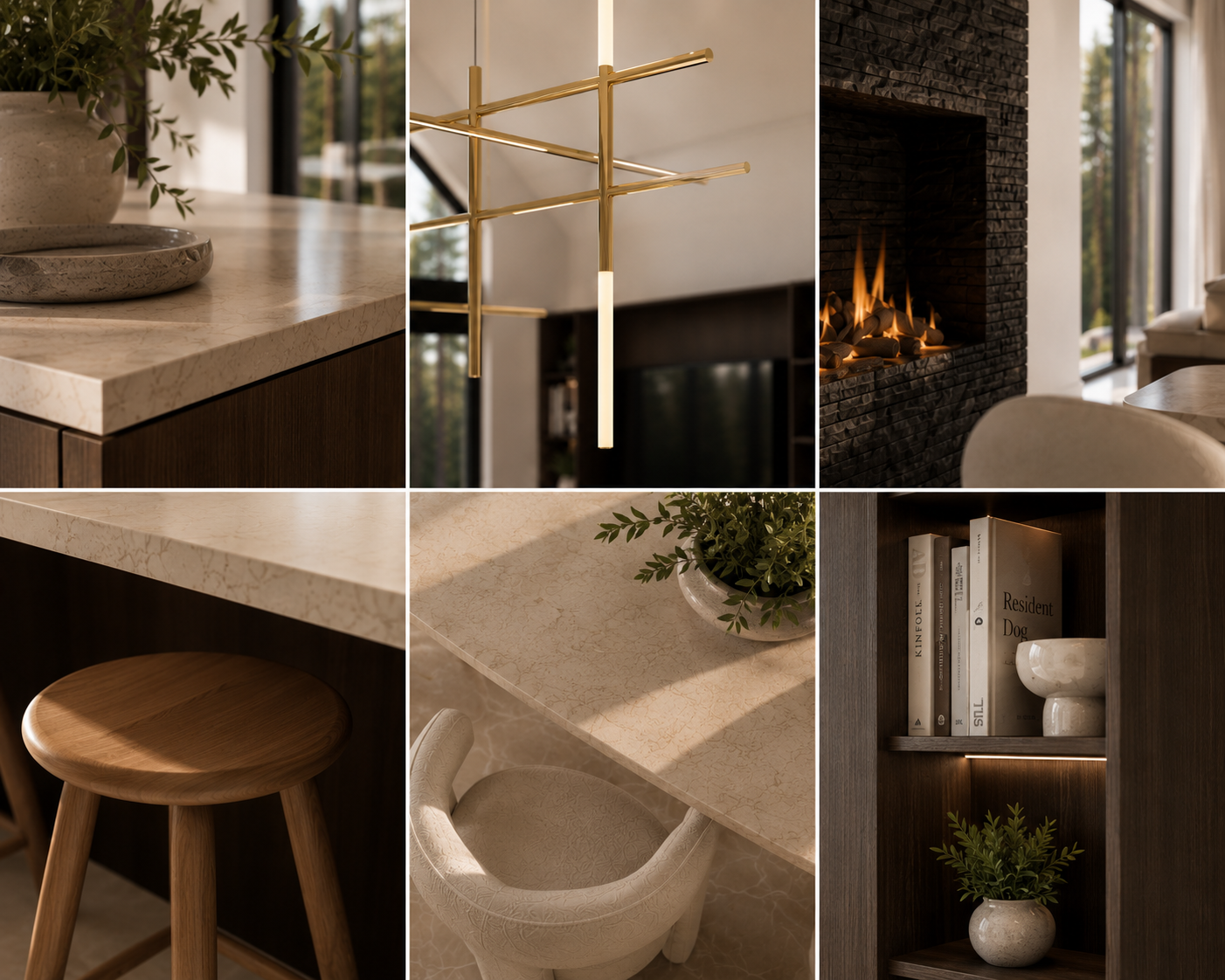
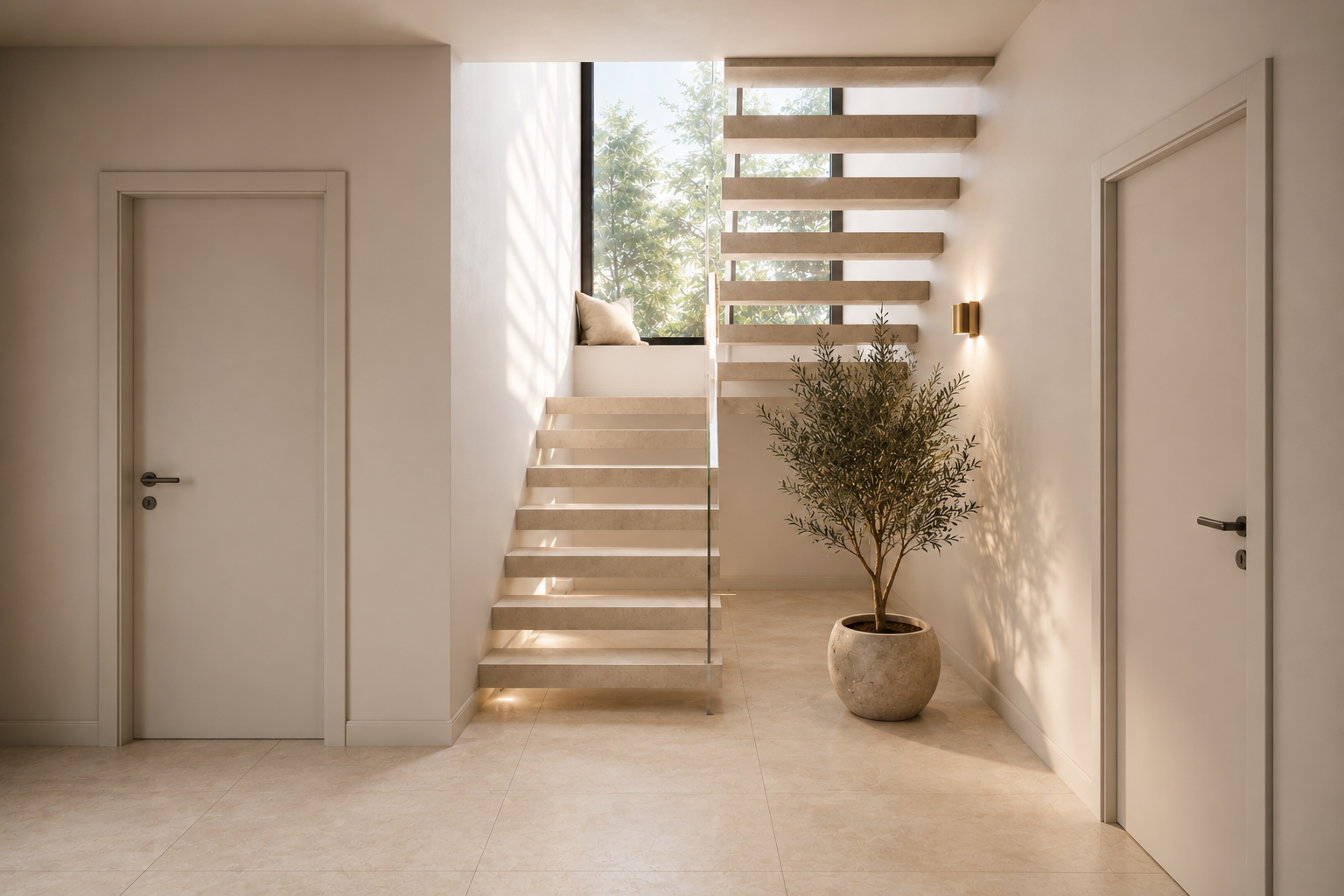
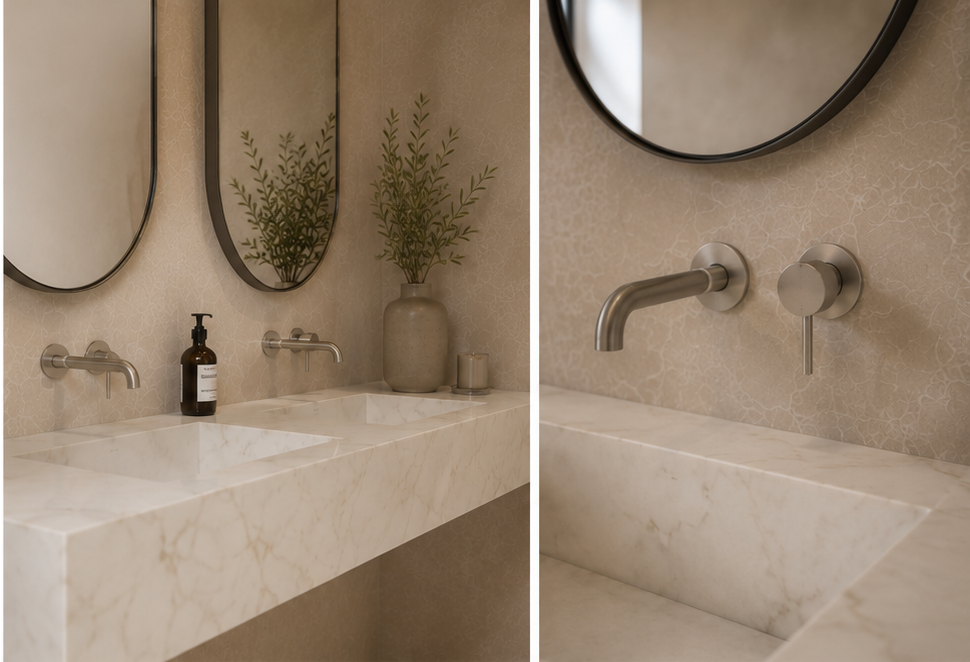
Bespoke joinery, threshold conditions, and material junctions developed specifically for this project — the small decisions that determine the quality of a building as it is lived in.
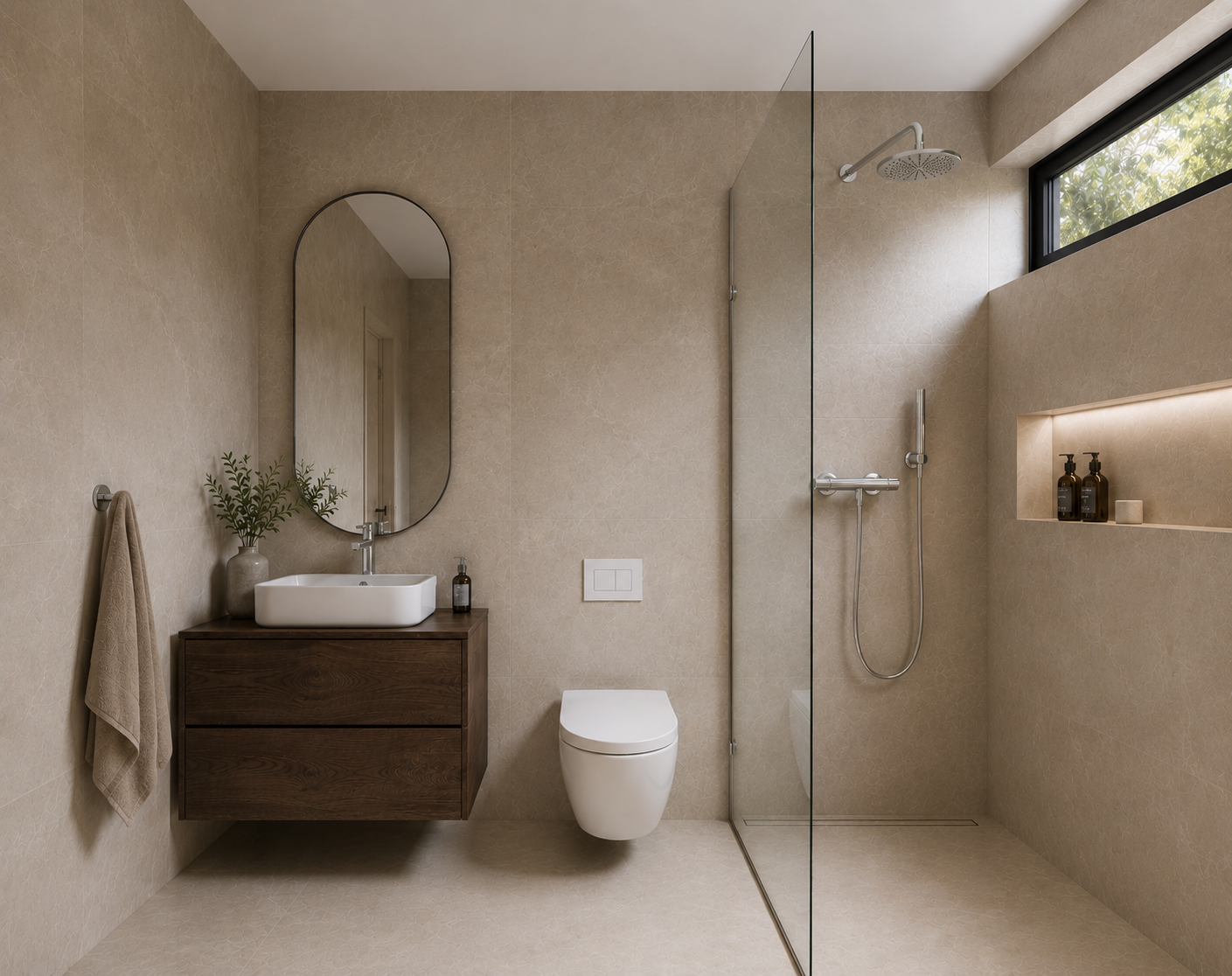
Kungslöv is defined by spatial logic rather than spatial decoration. Every feature serves the way the house is used, and every material contributes to an overall character that is calm, honest, and durable.
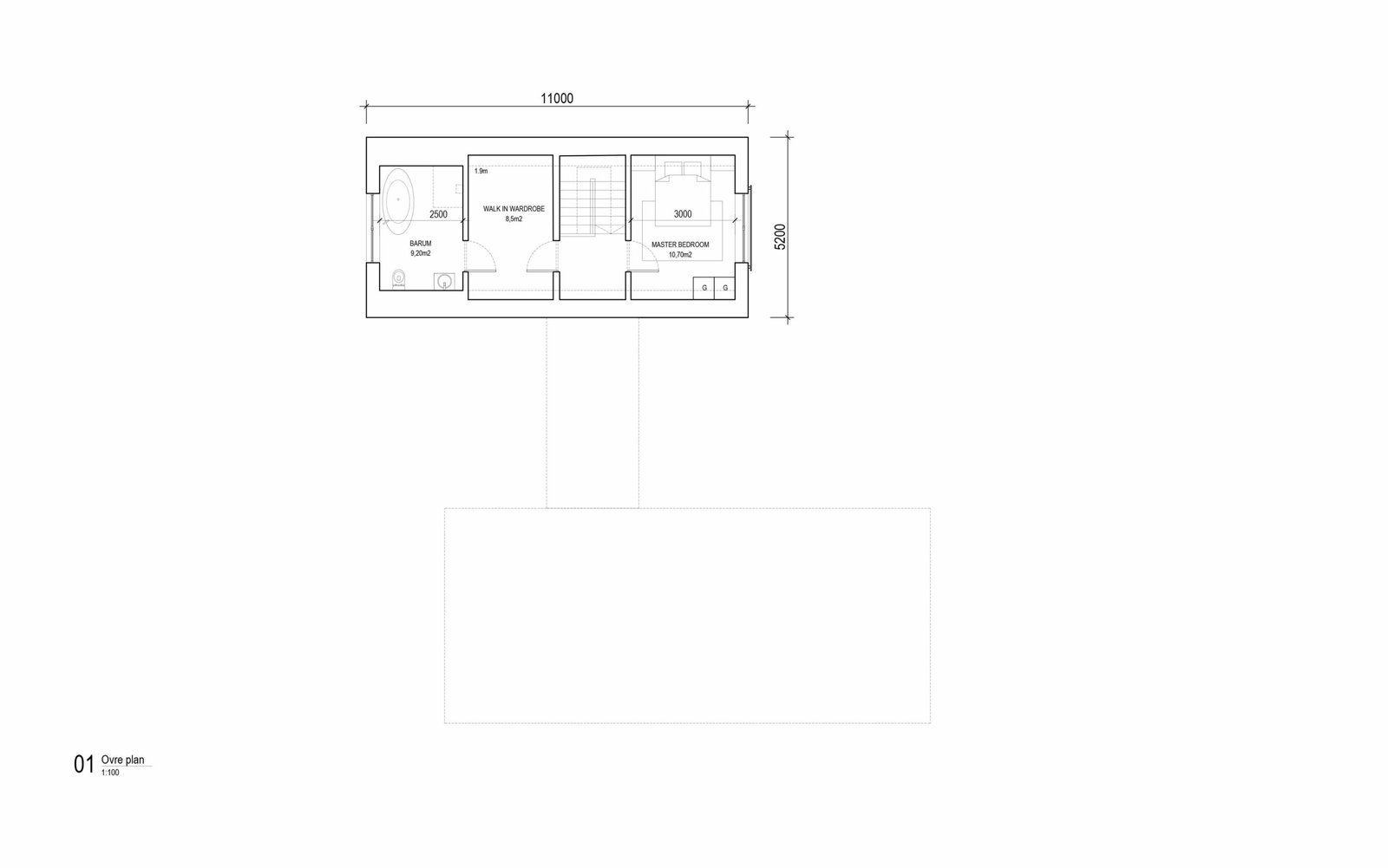
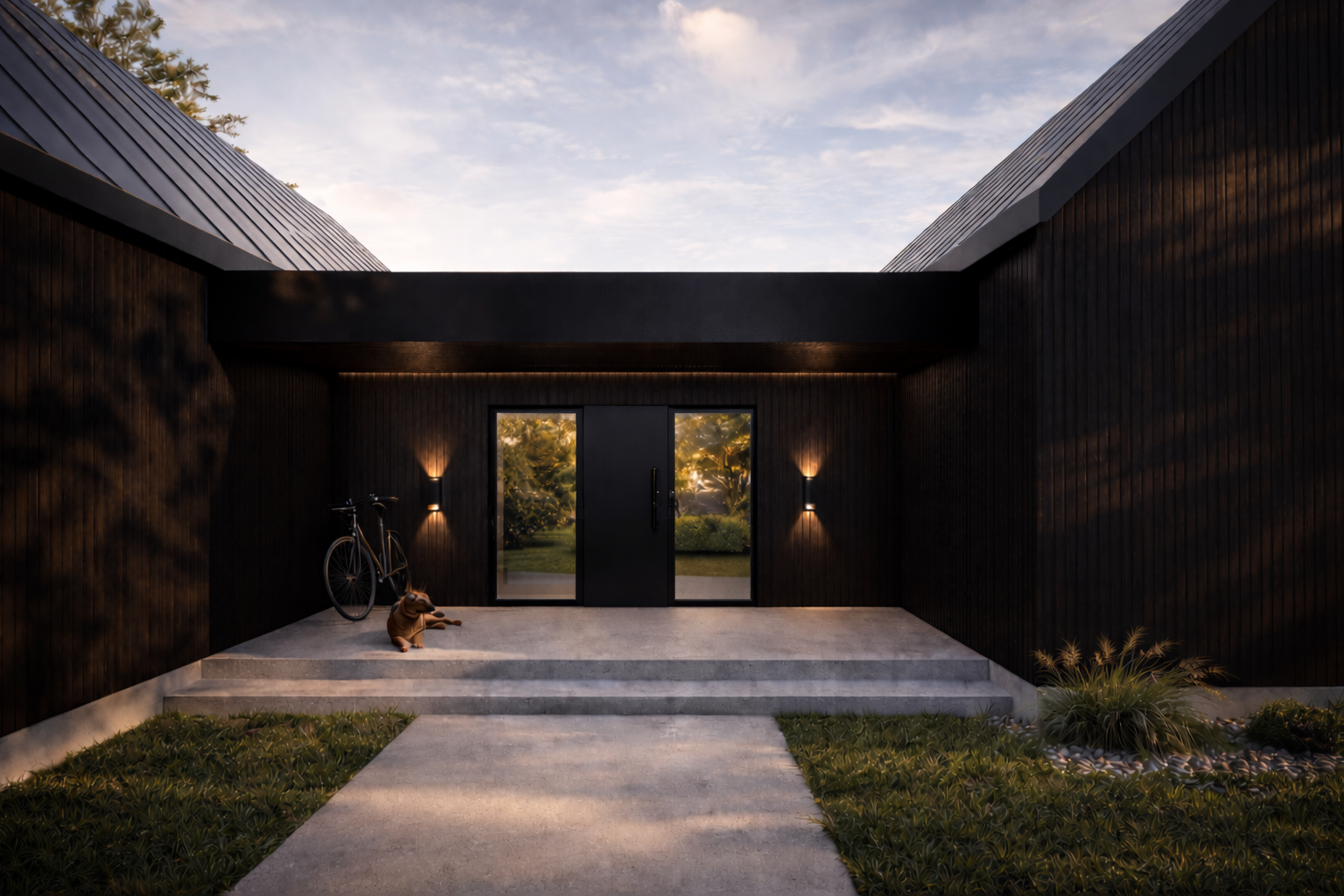
The plan is the project. The central volume holds the entrance — the point from which the house is understood and from which it extends in two directions. The left wing and right wing are distinct in character but connected through this shared threshold, allowing the house to function as a coherent whole while keeping its parts in productive separation. As a minimalist architecture strategy, the H-plan achieves more spatial richness than any collection of features could.
Designing a private residence for two people carries a particular set of demands. The scale is intimate, the programme specific, and the expectation high — this is not a home that will be sold or adapted for a general market. It is a home for a particular life, and it will be measured against that life every day.
The couple wanted a home that felt open and connected to its landscape, but also genuinely private. These two qualities are often in tension in residential architecture. The H-plan resolved this directly: the wings create protected zones on multiple sides of the house, allowing deep privacy from neighbouring properties and the public realm while maintaining generous visual connection to the natural landscape across the longer views.
The risk of a strongly organised plan is that it can feel overly fixed — a house where the zones are so defined that the architecture imposes itself on everyday life rather than accommodating it. At Kungslöv, this was addressed through the quality of the transitions: the central entrance volume acts as a breathing space between the wings, softening the zoning logic into something that reads as natural rather than schematic.
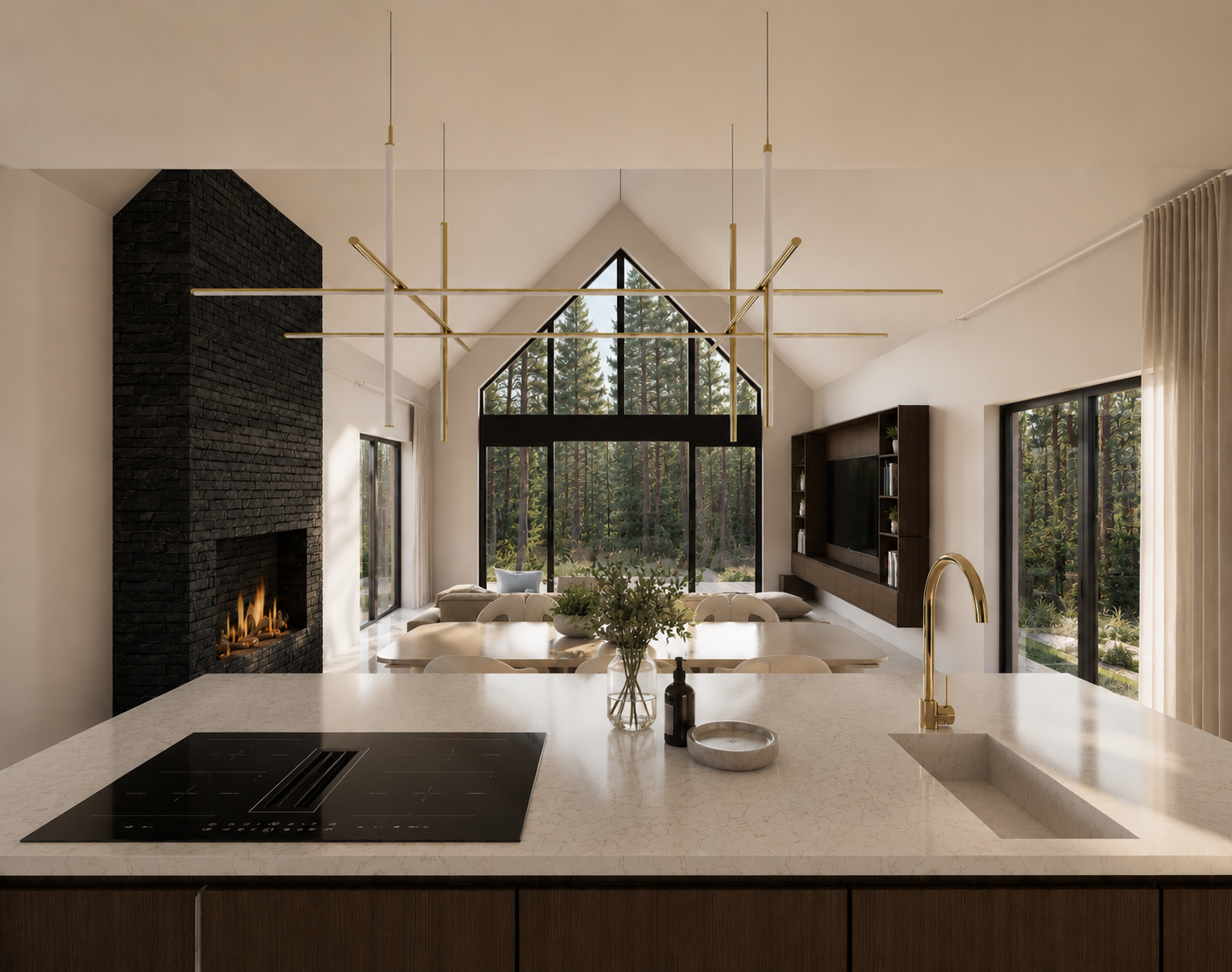
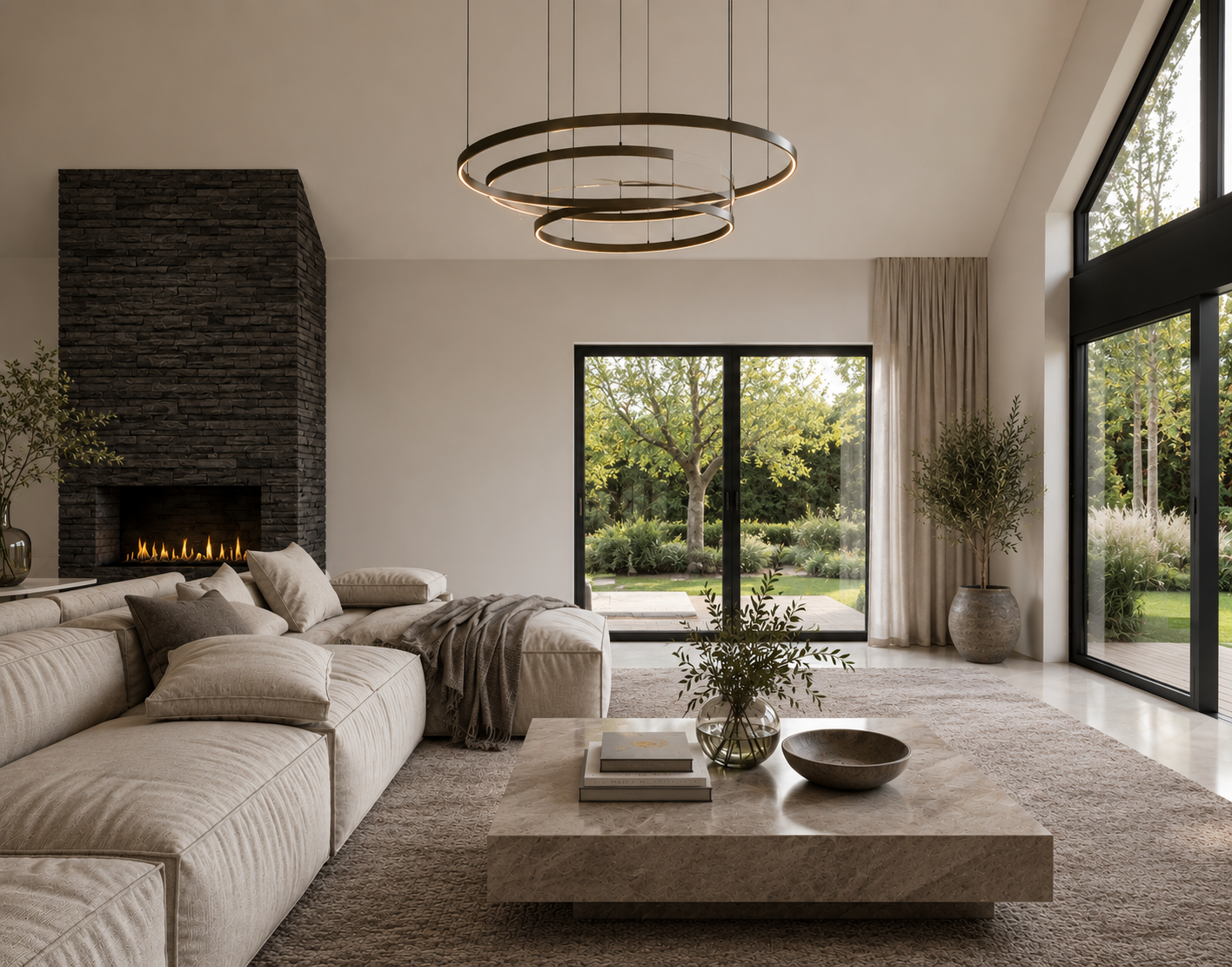
The Swedish climate demands careful attention to daylight. The H-configuration helps here considerably — both wings receive direct sunlight from multiple orientations, and the courtyard spaces allow light to penetrate the heart of the plan in a way that a conventional linear house could not achieve. The result is an interior that remains bright and engaged with the outside even in the shorter winter days.
A private residence designed for a couple should be a long-term home — not a statement that requires constant renewal, but a building whose qualities deepen as it is inhabited. This influenced every decision at Kungslöv, from the choice of Scandinavian architecture principles that privilege endurance over novelty, to the selection of materials that improve rather than degrade with time and use.
Private Villa Kungslöv delivers precisely what it set out to achieve: a calm, highly functional living environment with a strong and unmistakable architectural identity rooted in Scandinavian architecture. It is a home that performs differently from those around it — not through display, but through the quality of everyday life it supports.
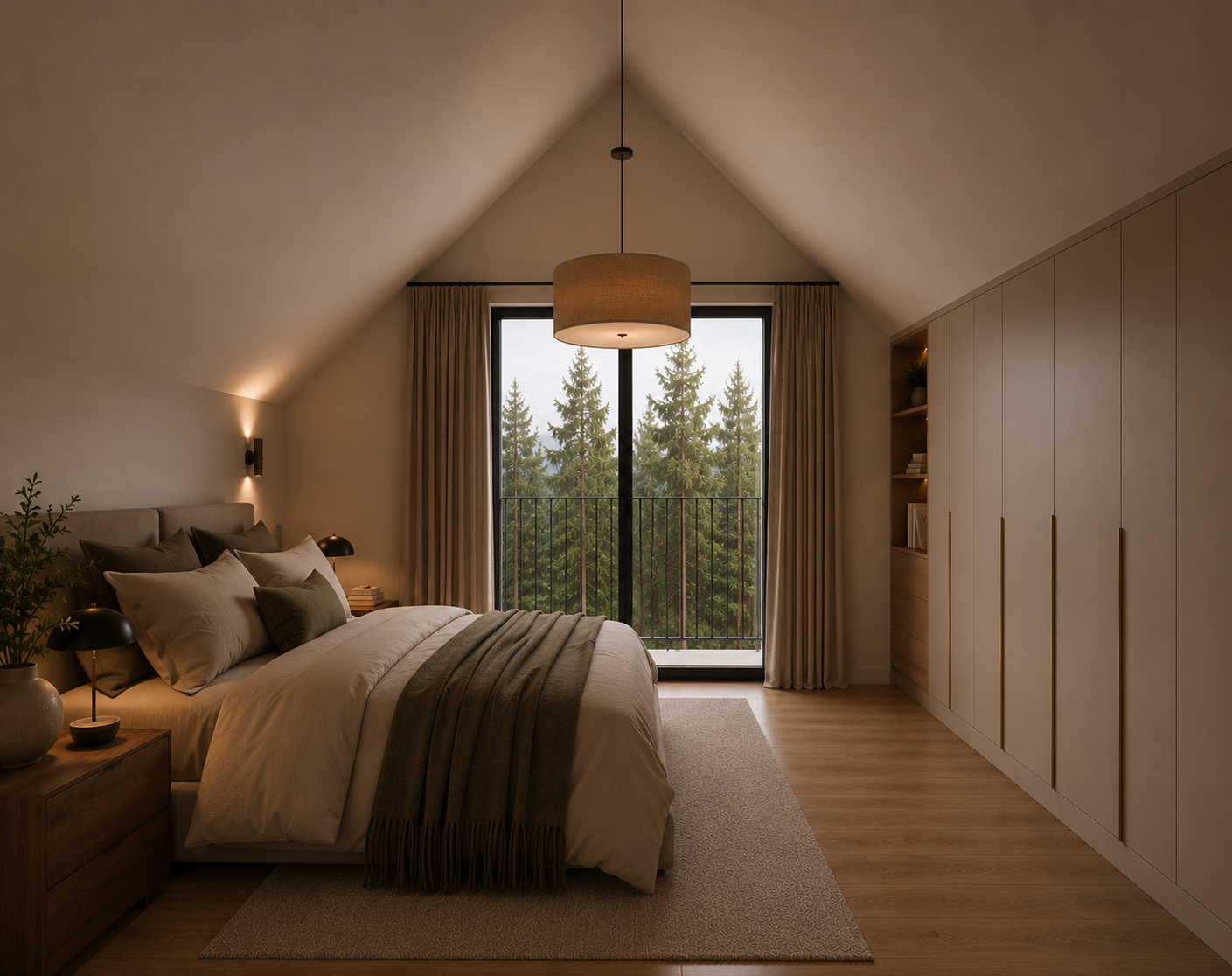
The H-plan and careful spatial proportions create an interior that is genuinely quiet — not acoustically only, but experientially. The house does not demand attention from those living in it; it supports them.
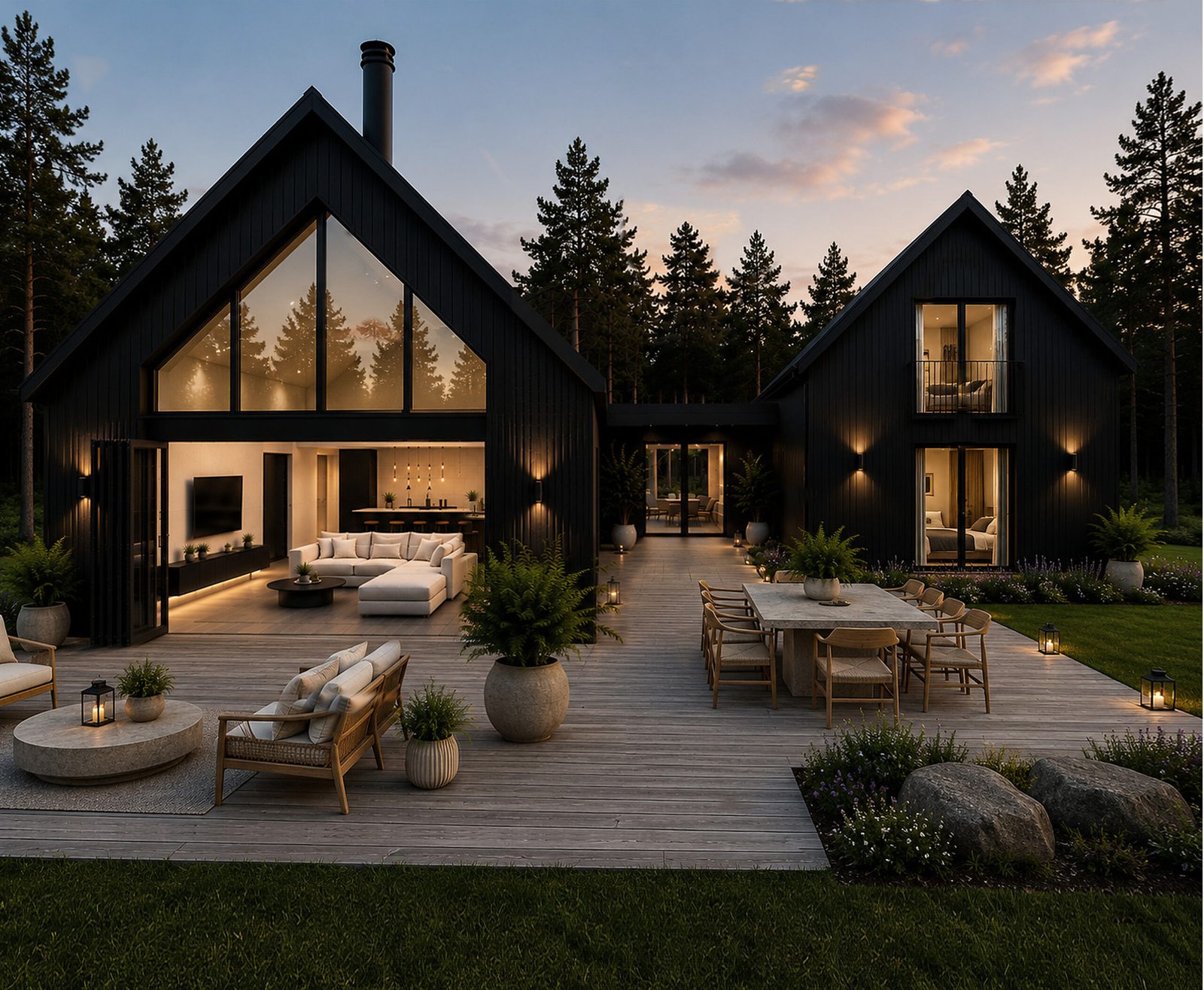
The Yakisugi facade and minimal material palette give the villa a distinctive architectural presence that reads as rooted and considered. This is a Nordic villa that will not feel of its era in twenty years.
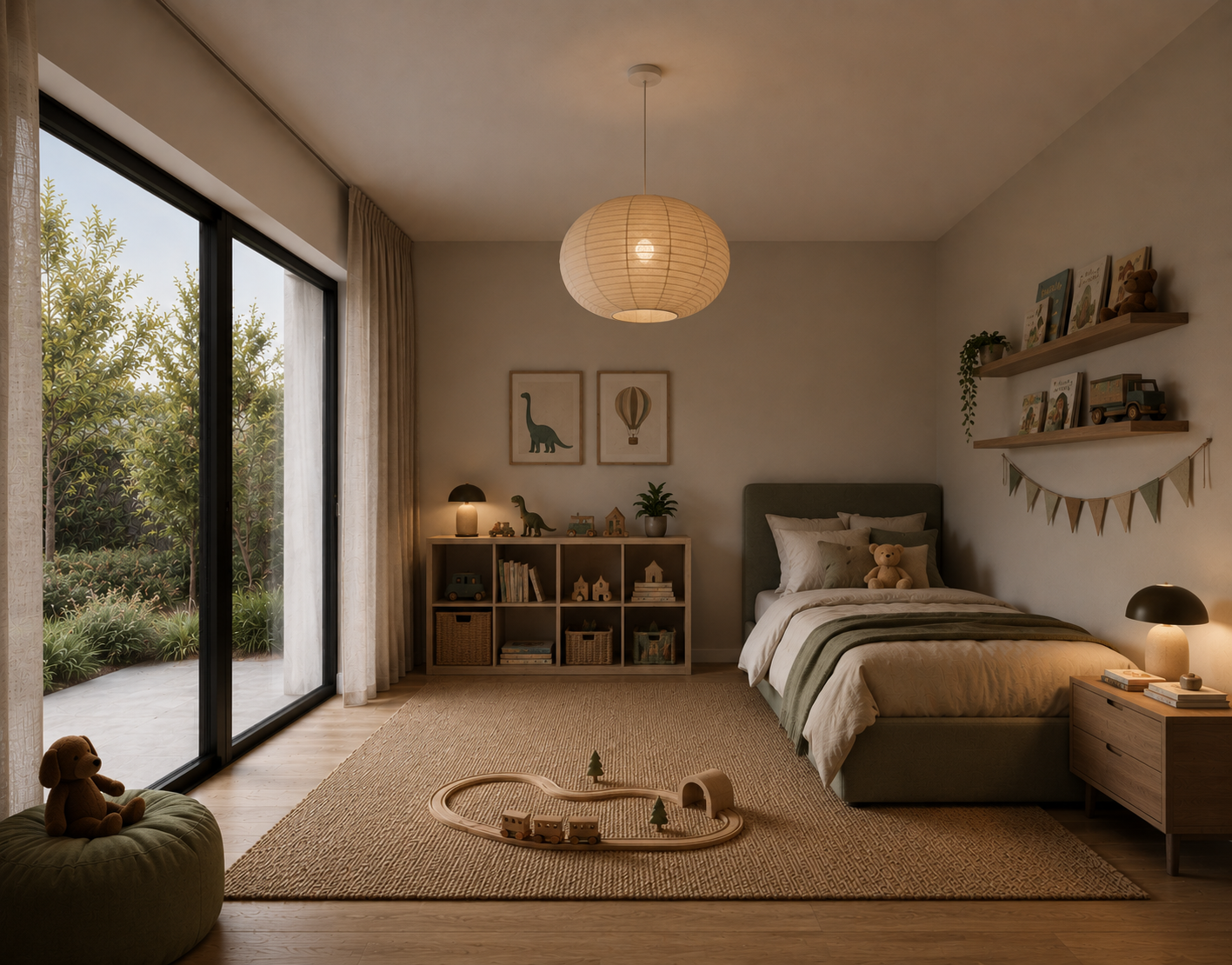
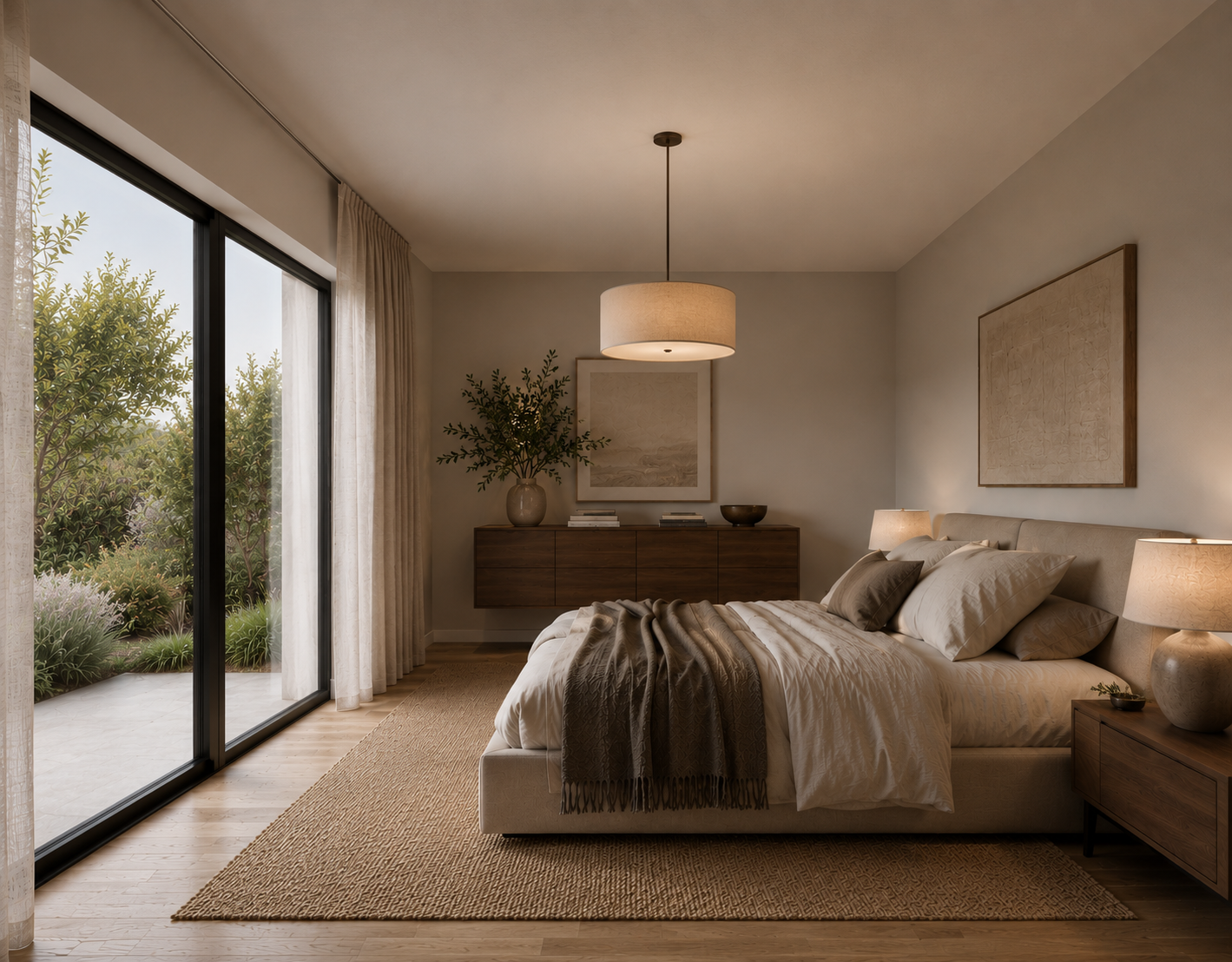
Large glazed openings, framed landscape views, and sheltered courtyard spaces extend the living environment beyond the walls of the house across all usable seasons.
A clearly organised plan with flexible zones means the house can absorb change over the coming decades without requiring structural intervention. It is built for a life, not a moment.
Private Villa Kungslöv is a new-build detached house in Kungslöv, Sweden, designed by ZU Arkitekt for a private couple. It is a Scandinavian villa design project that combines the studio's Nordic architectural principles — spatial clarity, material honesty, and a deep sensitivity to natural light — with the specific requirements of a private residential brief. ZU Arkitekt is an architectural studio with offices in Malmö, Sweden and London, UK, working on residential and commercial projects across Scandinavia and the United Kingdom.
An H-shaped house plan organises the building into two parallel wings connected by a central volume — in this case, the entrance and transition core. At Kungslöv, this configuration was chosen because it solves several spatial problems simultaneously: it separates the social and private zones of the home clearly without disconnecting them; it creates sheltered outdoor courtyard spaces between the wings; and it allows natural light to enter the plan from multiple orientations, which is particularly valuable in the Swedish climate. The H-plan is both a formal and a functional decision — the architecture follows the way the couple wanted to live.
Yakisugi — also known as Shou Sugi Ban — is a Japanese technique of charring the surface of timber to create a durable, deeply toned cladding material. The charring process carbonises the outer layer of the wood, making it highly resistant to fire, moisture, insects, and decay. At Kungslöv, Yakisugi was selected for several reasons: its dark, rich tone creates a strong architectural presence that suits the Scandinavian landscape; its texture and depth reward close observation in a way that synthetic materials do not; and its long-term performance characteristics align with ZU Arkitekt's commitment to materials that improve with time rather than deteriorating.
ZU Arkitekt approaches Scandinavian villa design through a consistent set of principles: spatial clarity over formal complexity, material honesty over surface decoration, and a deep attention to how natural light moves through a building across the day and across the seasons. Every project begins with the specific conditions of the brief and the site, rather than with a formal language imposed from outside. The studio's Scandinavian roots — it is headquartered in Malmö — mean these principles are not applied as a style, but are genuinely embedded in how the team thinks about architecture and residential design.
For private residential projects, ZU Arkitekt provides a full architectural service from initial concept through to planning approval and construction coordination. This includes architectural concept development, spatial planning, interior design strategy, façade and material specification, custom detailing, and full planning documentation. The studio is registered in the UK and works with private clients across Sweden and Britain, offering direct access to the design team throughout every project. A summary of all services is available at zuarkitekt.com/services.
ZU Arkitekt treats the landscape as part of the design brief rather than a backdrop. At Kungslöv, this means framing views rather than simply opening to them — creating a visual relationship with the surrounding environment that feels considered and selective rather than passive. The H-shaped plan generates sheltered courtyard spaces that bring the outdoors into direct contact with the interior on protected, private terms. The positioning and scale of glazed openings was studied carefully against the orientation of the site, ensuring the interior receives the best available daylight while maintaining a sense of enclosure and privacy appropriate to a couple's home.
Yes. Private Villa Kungslöv represents ZU Arkitekt's approach to bespoke residential architecture — disciplined, calm, and specific to the brief and the site. The studio works with private clients and developers across Sweden and the UK on new-build houses, renovations, and luxury residential developments. If you are considering a private Nordic villa, a modern Scandinavian house, or a new residential project and would like to discuss it with the studio, contact ZU Arkitekt via the London or Malmö offices, or use the contact form on the website. Every project begins with a conversation.
ZU Arkitekt operates from two studios: Enhersvärdsgatan 1, Malmö, Sweden and 13 Elborough Street, SW18 5DP, London, UK. The studio is registered in the UK and active across both Sweden and Britain. Projects include private villas and detached houses, developer residential schemes, and commercial architecture. The studio can be reached by telephone at +46 70 445 9741 (Malmö) or through the contact form at zuarkitekt.com/contact-us.
Speak with ZU Arkitekt About Your Residential Development