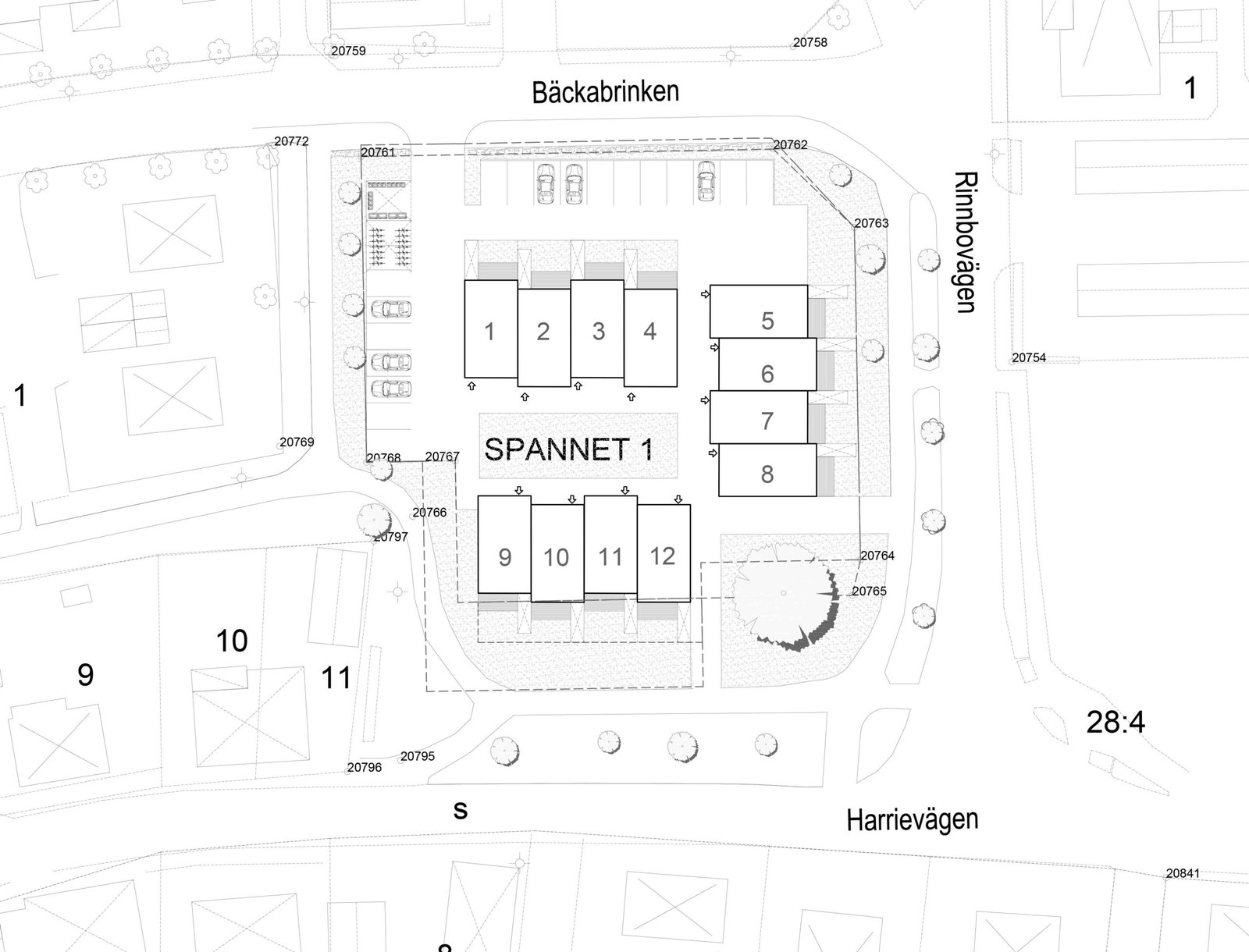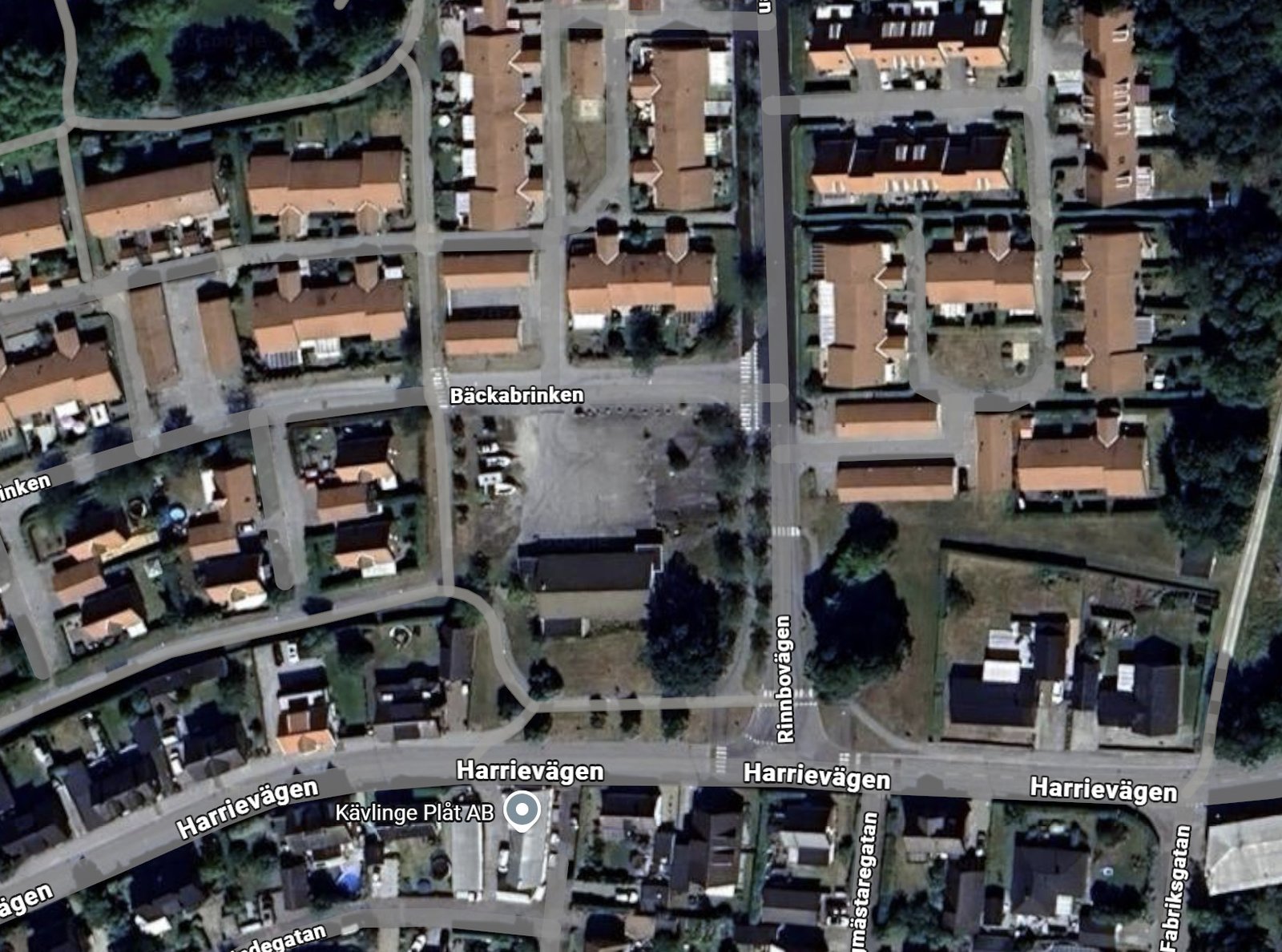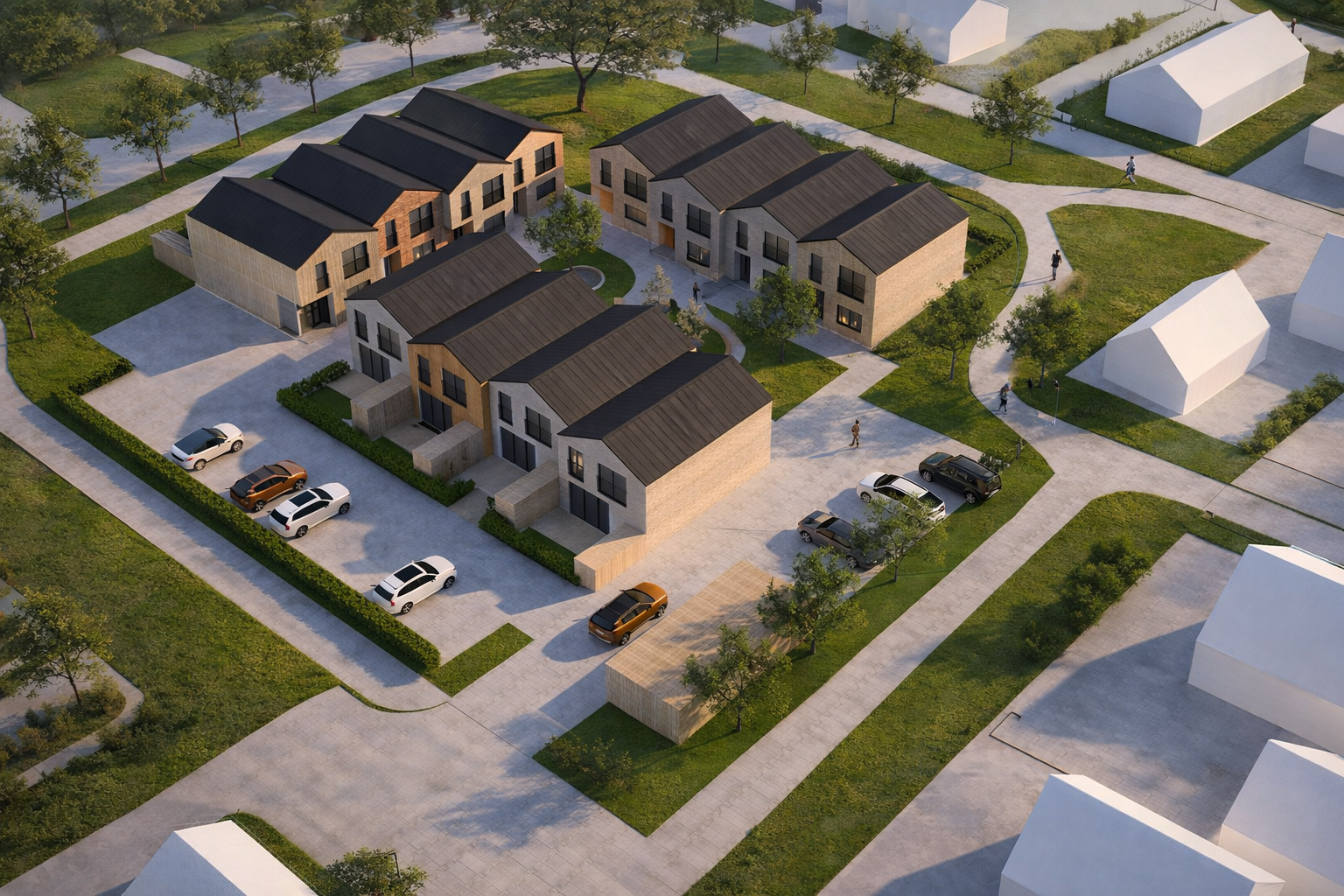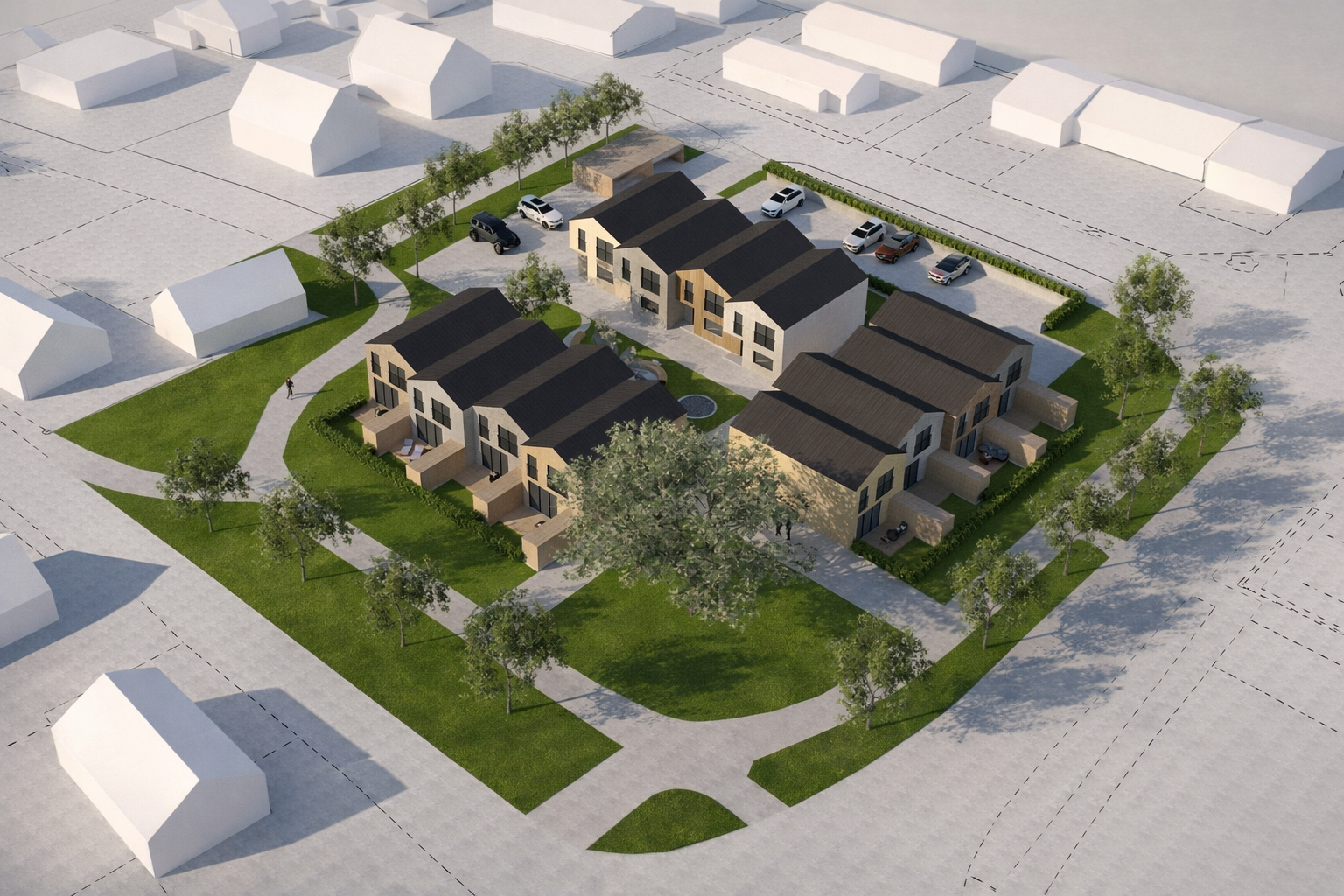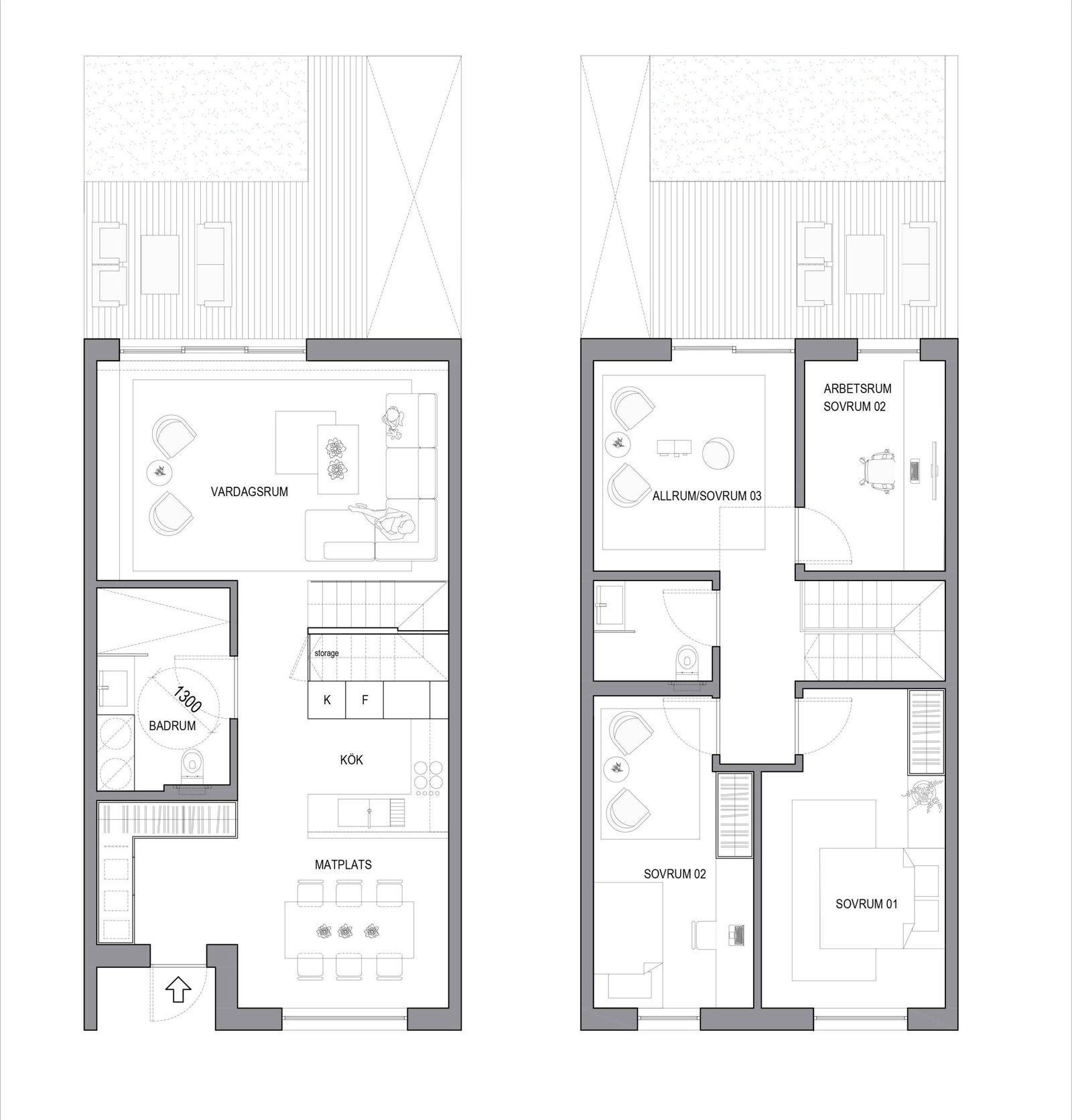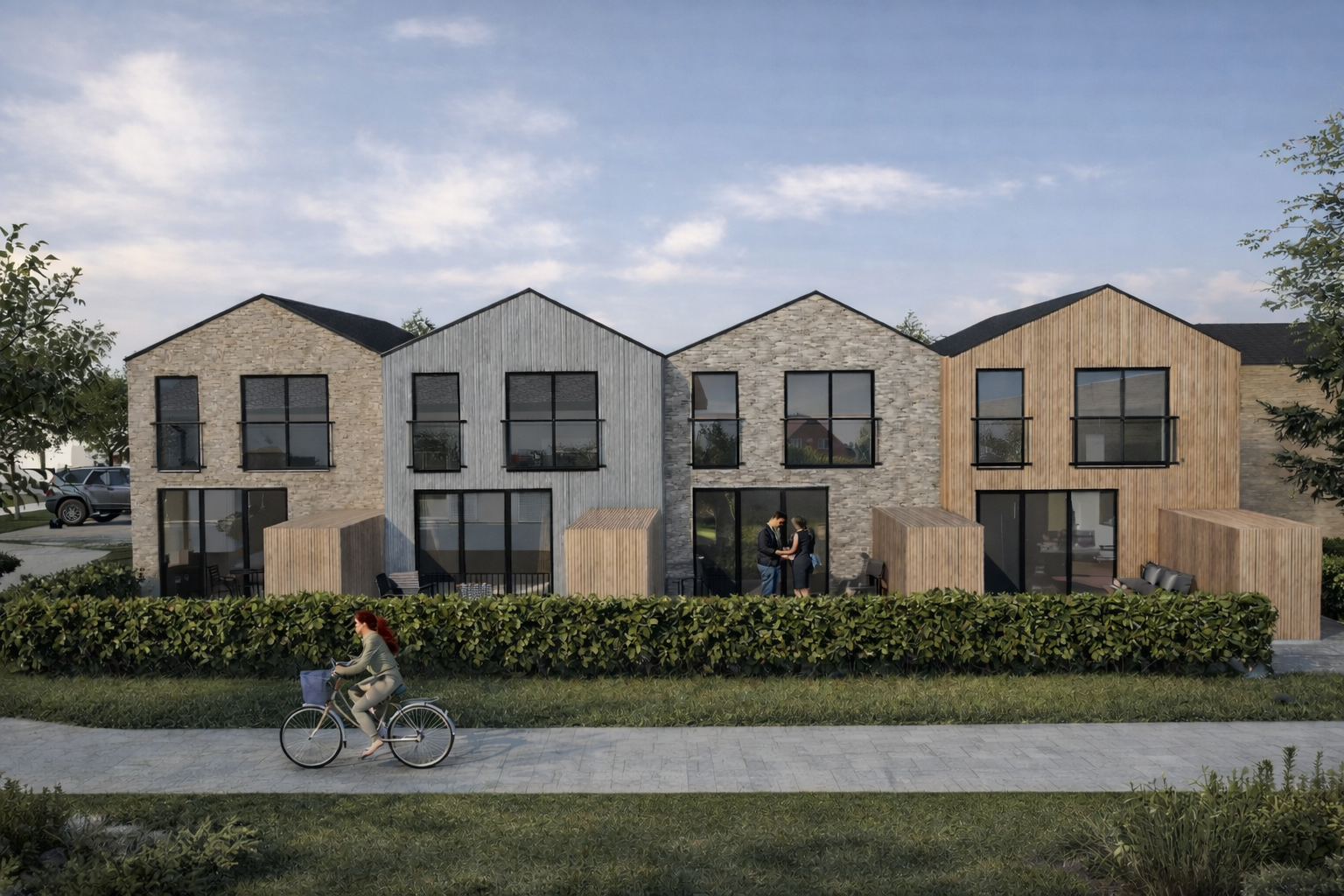
The Kävlinge Residential Development is an urban planning and residential masterplan project by ZU Arkitekt, located in Kävlinge, Sweden. The project takes a centrally positioned industrial plot — underutilised, spatially unclear, and economically limited in its existing condition — and reworks it from the ground up as a structured townhouse neighbourhood with a clear identity, legal framework, and long-term residential value.
Through the creation of a new Swedish detailed development plan, or detaljplan, the project unlocks the latent potential of a site that its surroundings had long outgrown. Twelve contemporary townhouses, each with private outdoor space and seamlessly integrated infrastructure, are arranged with a spatial logic that is both efficient and genuinely liveable. This is Scandinavian urban design applied at the scale where it matters most: the neighbourhood, the street, the threshold between a private home and a shared public realm.
The site’s original condition told a familiar story: a single industrial building occupying a central plot, its function long obsolete, its spatial and economic contribution to the surrounding neighbourhood negligible. The question was not whether the site should change, but how that change could be made with sufficient clarity and quality to produce lasting urban value rather than simply filling a gap.
“Successful urban planning is not measured by density alone, but by the quality of life created within it.”
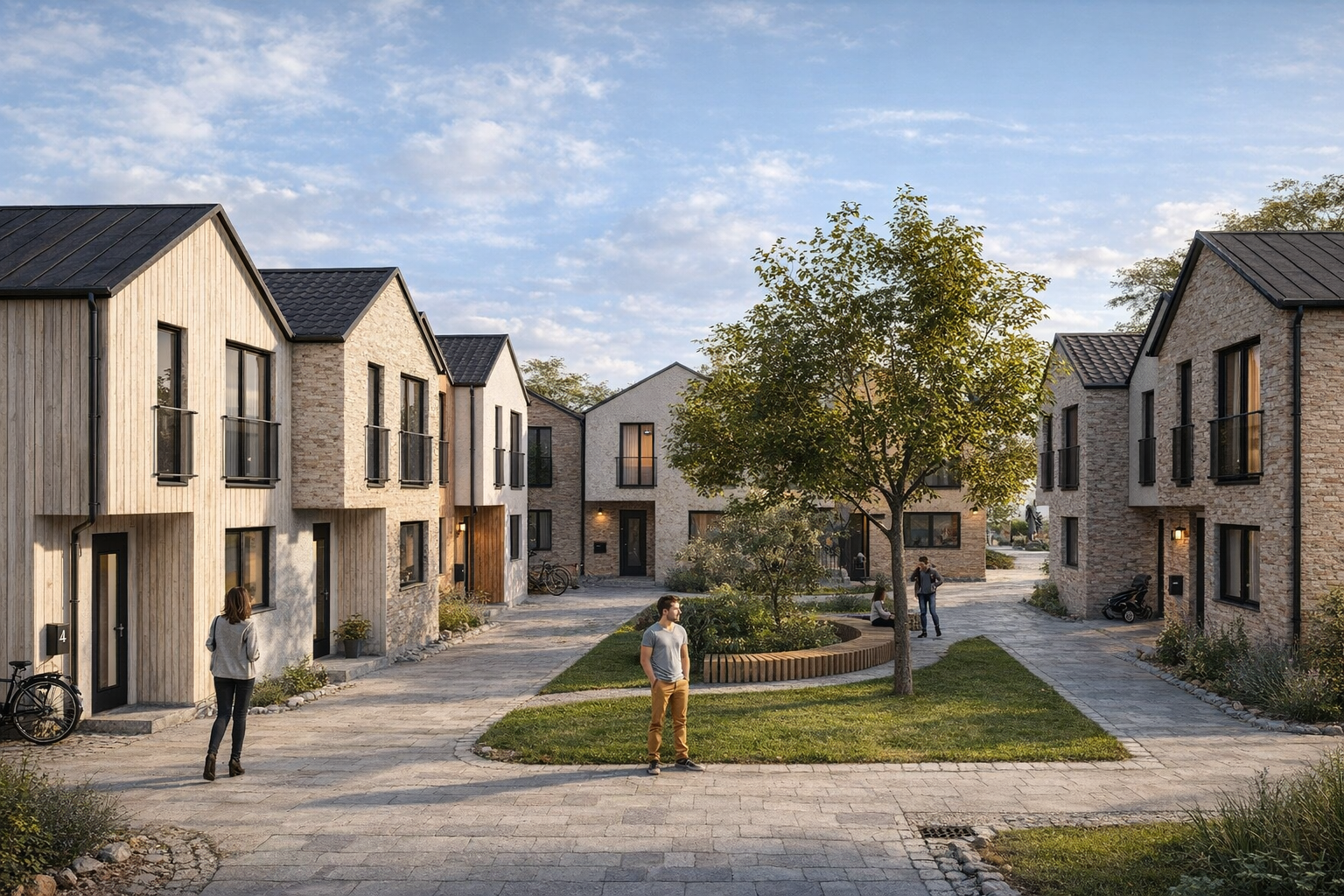
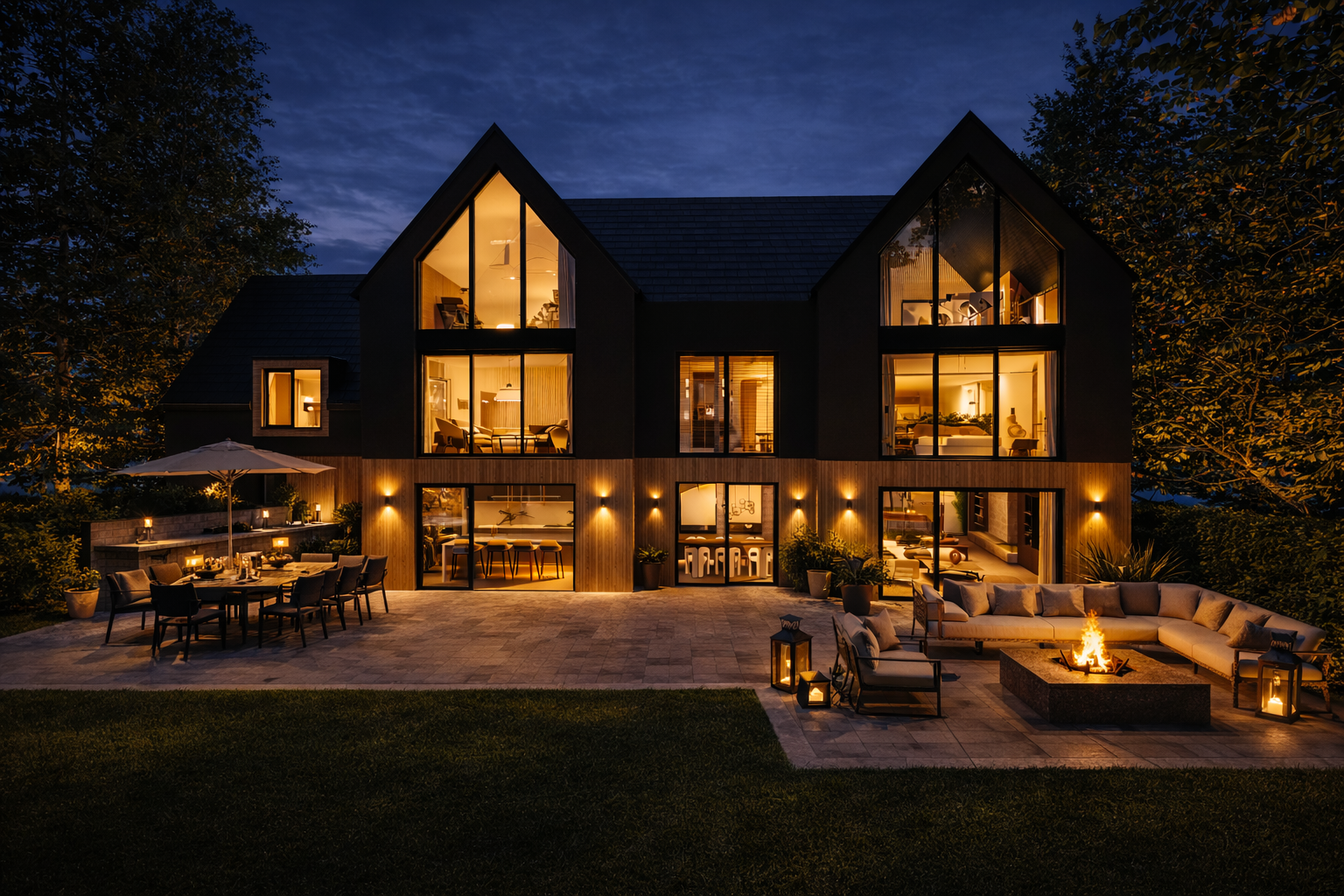
The vision for Kävlinge was precise: create a residential development plan that translates an industrial remnant into a coherent townhouse neighbourhood, without importing the generic forms and spatial compromises that too often accompany urban densification. The Scandinavian townhouse development model was chosen because it performs exceptionally well at this scale — it achieves meaningful density without surrendering the qualities that make a neighbourhood worth living in. Private gardens, individual street addresses, human-scale massing, and a clear relationship between public and private space are not concessions to comfort; they are the conditions for sustainable residential success.
The layout was shaped around a straightforward but demanding set of criteria: every unit should receive adequate daylight, every household should have genuine outdoor space, and the development as a whole should read as a unified neighbourhood rather than a collection of houses placed on a plan. Achieving all three within the constraints of the site required careful spatial work — the kind that becomes invisible once it is done well.
The massing and typology of each unit were defined to create a coherent streetscape while allowing enough variation to avoid repetition. Building heights, roof forms, and unit widths were coordinated to produce a neighbourhood that reads as a whole rather than a series of identical plots.
Parking for the development is distributed and positioned to serve the units efficiently without interrupting the quality of the shared public space. Access to the site is organised through a single primary route that branches to serve all twelve units, keeping the number of kerb cuts and vehicle crossings to a minimum and allowing the street frontage to prioritise pedestrians. Refuse collection, service access, and utility connections are incorporated into the plan from the outset, rather than retrofitted around a completed layout — an approach that significantly reduces visual clutter and operational friction in the completed development.
The approved detaljplan provides legal certainty for every aspect of the development — building volumes, heights, setbacks, land uses, and infrastructure obligations are all defined. A developer acquiring the site inherits a ready-to-build framework, reducing both the risk and the time required to initiate construction.
Townhouses with private gardens and individual street addresses address one of the most consistently under-supplied segments of the Swedish residential market: housing suited to families who want the spatial quality of a detached house but prefer a central urban location. The Kävlinge development is positioned precisely in this gap.
A well-designed residential neighbourhood contributes to the quality of its surrounding area over time. The spatial clarity, architectural coherence, and public realm quality of the Kävlinge masterplan mean the development will strengthen its context rather than merely occupy it.
The Kävlinge Residential Development — project reference Spannet 1 — is an urban planning and residential masterplan project completed by ZU Arkitekt in 2023. It involves the transformation of a centrally located industrial site in Kävlinge, Sweden into a structured neighbourhood of twelve family townhouses. ZU Arkitekt provided the full planning and architectural service, from site feasibility through to the creation of an approved Swedish detailed development plan and an architectural concept for the residential units. The studio is based in Malmö and London and works on residential and urban planning projects across Scandinavia and the UK.
A detaljplan is a Swedish detailed development plan — the legal document that defines how a specific area of land can be used and built on. It specifies building rights, permitted uses, maximum building heights and volumes, setbacks, infrastructure requirements, and other conditions that regulate construction. For a developer, an approved detaljplan is the foundation of a project: without it, the land cannot be built on as intended, regardless of what has been designed. At Kävlinge, the creation of a new detaljplan was the central task of the project — it transformed the site from industrial land to a residential asset with full legal clarity for construction of the twelve townhouses.
Townhouses were selected for Kävlinge because they achieve meaningful residential density while preserving the spatial qualities that make a neighbourhood genuinely liveable: private outdoor space, individual street addresses, acoustic separation between units, and a clear sense of ownership and identity. The Scandinavian townhouse development tradition has a long track record of producing housing that performs well both as a living environment and as a market product over time. For a constrained urban infill site in a Swedish municipality, the townhouse typology is also well aligned with the planning requirements and the expectations of the local residential market, particularly among families looking for central locations.
The Kävlinge masterplan was designed around the principle that density and livability are not in opposition — but that achieving both requires discipline. Twelve units was the number the site could accommodate with genuine spatial quality: adequate private outdoor space for each household, sufficient distance between units for privacy and daylight, and enough shared open space for the neighbourhood to feel generous rather than compressed. Maximising unit count at the expense of these qualities would have produced housing that the market values less over time, reducing both the long-term residential satisfaction of occupants and the investment performance of the development. ZU Arkitekt's position is that livability and development value are the same objective, approached from different directions.
ZU Arkitekt offers a full range of planning and urban design services for residential development projects in Sweden and the UK. For projects requiring a Swedish detaljplan, the studio can manage the entire process — from site analysis and feasibility through to preparation of the planning application and coordination with the relevant municipality. For larger urban residential development schemes, the studio provides masterplan design, housing typology studies, layout optimisation, infrastructure strategy, and architectural concept design for individual unit types. The Kävlinge project is a strong reference for this capability. Contact the studio via the website or through the Malmö or London offices to discuss a specific project.
ZU Arkitekt approaches Scandinavian urban design through the same set of principles it applies to individual buildings: spatial clarity, material honesty, and a focus on how people actually use and move through the spaces being designed. At the neighbourhood scale, this means paying close attention to the hierarchy between public, semi-private, and private space; the rhythm and consistency of the street frontage; the relationship between building massing and the quality of outdoor space between buildings; and the long-term robustness of the urban structure as the neighbourhood evolves over time. These principles are not stylistic — they are the conditions for a neighbourhood that residents value and invest in over decades.
Yes. The Kävlinge Residential Development is a direct demonstration of ZU Arkitekt's capability in this area. The studio can assess the development potential of an industrial or underutilised site, prepare a feasibility study, develop an urban layout and housing typology strategy, and manage the creation of a new Swedish detaljplan or equivalent UK planning application. Industrial-to-residential conversions present specific planning and design challenges — particularly around land use change, infrastructure capacity, and integration with the surrounding urban context — that ZU Arkitekt is experienced in navigating. If you have a site you are considering for residential development, contact the studio to begin the conversation.
Speak with ZU Arkitekt About Your Residential Development